

Tisha B’Av, also known as Ninth of Av, is the traditional day of mourning for the destruction of the temples in Jerusalem. This day usually occurs in July or August.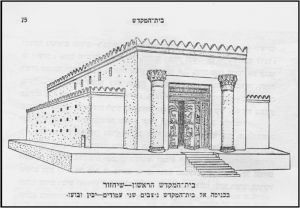
According to Jeremiah 3:12, the Babylonian destruction of the First Temple occurred on the tenth of Av. However, II Kings 25:8-9 dated the event on the seventh of Av. According to the Tosefta Ta’anit 4:10, the discrepancy is due to the destruction of the outer walls and the courtyard, which started on the seventh of Av, while the entire structure was destroyed on the tenth of Av. Although some rabbis disagree, the majority decided that it is more fitting to remember the “beginning of the calamity.”
According to Josephus, the Romans destroyed the Second Temple in 70 A.D., on the tenth of Av. The Karaites still observe this day as a day of mourning. The ninth of Av was the date recorded by the Talmud and, therefore, became accepted as the anniversary of both destructions.
The Talmud classified the ninth of Av as a major day of mourning because of these five disasters:
- It was on the ninth of Av that the Children of Israel, after the Exodus from Egypt, were not allowed to enter the Promised Land;
- The First Temple was destroyed;
- The Second Temple was destroyed;
- The city of Bethar, the last city to fall during the Bar Kokhba war, was captured in 135 A.D.;
- In 136 A.D., Roman emperor Hadrian established a heathen temple on the site of the Solomonic Temple and rebuilt Jerusalem as a pagan city. Jews were then forbidden to enter the Holy City.
Based on these calamities, the ninth of Av became the symbol for all persecutions and misfortunes of the Jewish people, for the loss of national independence and for the sufferings in exile.
The Ninth of Av is the culmination of a three week period of increasing mourning, beginning with the fast on the 17th of Tammuz, which commemorates the first breach in the walls of Jerusalem, before the First Temple was destroyed. During the three week period, weddings and other parties are not permitted and people refrain from cutting their hair. Many of the traditional mourning practices are observed:
- Complete abstention from food and drink;
- Bathing is strictly forbidden: the washing of face and hands is permissible for cleansing purposes only;
- The use of oils for anointing and use of perfumes is forbidden; sexual intercourse is also forbidden;
- Wearing footwear made of leather is also forbidden;
- One must sit either on the ground or on a low stool, refrain from smiles, laughter and idle conversation;
- It is customary to not work and deal with business because Tisha b’Av was regarded as an inauspicious… day. Someone who works on the 9th of Av would not benefit from his efforts;
- The study of the Torah is forbidden because it is a source of joy, except for the reading of certain texts such as Lamentations, the Book of Job, the curses of Leviticus, and some chapters of Jeremiah.
In modern Israel, besides special synagogue services to commemorate the ninth of Av, public places of entertainment and restaurants are closed on the eve on Tisha b’Av.
Ask your Jewish friends about this holiday. Do they mourn? What does the Temple mean to them? Perhaps you will get an opportunity to talk about the fact that the New Testament teaches that the indestructible temple of the Lord is in the Believer’s heart (John 2:19-21, I Cor. 3:16; 6:19).
** Picture credit: http://instruct1.cit.cornell.edu/courses/nes275/studentproj/fall05/rmb43/temple.jpg